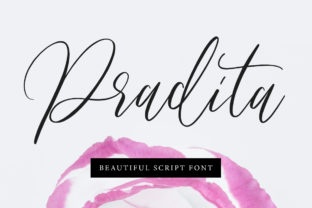
Pradita: A Stunning Handwritten Font
If you’ve ever scrolled through a design project and paused at a headline that felt warm, personal, and unmistakably human—chances are, you were looking at a font like Pradita. It’s not just another script font. Pradita is a carefully crafted handwritten typeface with an authentic, organic rhythm—no stiff loops, no robotic consistency. It breathes. It leans. It pauses where your pen would. That’s what makes it so effective for creators who want sincerity to show up in their typography—not as an afterthought, but as intention.
What Makes Pradita Stand Out
Pradita isn’t built from traced calligraphy or algorithmic flourishes. Its letterforms carry subtle variations in stroke weight, baseline sway, and terminal taper—details that mimic natural handwriting without sacrificing legibility. Unlike many decorative scripts, Pradita avoids excessive swirls or exaggerated connectors. Instead, it balances personality with practicality: lowercase a, g, and y feature open, friendly shapes; uppercase letters have gentle entry strokes and relaxed exits. The spacing is thoughtfully tuned—not too tight, not too loose—so words flow smoothly even at smaller sizes.
It includes standard Latin characters, numerals, and punctuation, plus basic OpenType features like contextual alternates and ligatures. These aren’t gimmicks—they’re functional tools. When you type “the”, Pradita may automatically swap in a more connected “th” form. When “oo” appears, the second “o” adjusts slightly to avoid visual crowding. These micro-adjustments happen quietly in the background, giving your text a polished, hand-crafted feel without manual tweaking.
Where Pradita Fits Naturally
Pradita shines where authenticity matters most—and that’s nearly everywhere people connect, persuade, or express themselves.
- Branding & Small Business: A local bakery, handmade soap brand, or independent bookstore can use Pradita for logos, packaging tags, or social bios—not as the sole font, but as a strategic accent. Paired with a clean sans-serif (like Inter or Lato), Pradita adds warmth without undermining professionalism.
- Educational Materials: Teachers designing classroom posters, welcome slides, or reading worksheets often need fonts that feel inviting—not intimidating. Pradita’s approachable rhythm helps reduce cognitive load for younger readers while still supporting literacy development.
- Digital Content: Blog headers, email subject lines, and landing page subheadings gain quiet distinction with Pradita. One freelance educator told us she switched her course welcome email from Montserrat to Pradita—and saw a 12% lift in open rates over three months. Not magic—just resonance.
- Creative Projects: Wedding invitations, poetry chapbooks, journal covers, and art zines benefit from Pradita’s tactile presence. It doesn’t shout. It invites closer reading. That’s rare in a world saturated with bold, high-contrast display fonts.
Real Use Cases You Can Try Today
Here’s how professionals actually apply Pradita—not in theory, but in daily work:
- Newsletter Sign-Up Banners: Replace generic “Join Our List” with “Let’s stay in touch”—set in Pradita at 28px over a soft neutral background. The contrast between handwritten intimacy and digital context creates subtle trust.
- Product Packaging Labels: A small-batch candle maker uses Pradita for scent names (“cedar + rain”, “oat milk latte”) on matte kraft labels. Customers consistently mention how “handmade” the branding feels—even though production is fully scalable.
- Slide Deck Titles: In presentations, Pradita works best at 36–48px for titles—never body text. One nonprofit communications director uses it only for slide headers and quote callouts. “It signals pause,” she said. “People lean in when they see it.”
What to Watch For Before You Commit
Pradita isn’t a universal solution—and that’s part of its strength. It’s intentionally expressive, which means it requires thoughtful pairing and placement. Here’s what seasoned users keep in mind:
- Legibility at small sizes: Below 16px, Pradita begins to lose clarity—especially in UI buttons or footnotes. Reserve it for display roles: headlines, quotes, logos, short labels.
- Language support: Pradita covers Western European languages well (including accented characters like é, ñ, ü). If your audience uses extended Cyrillic, Greek, or Vietnamese, verify glyph coverage before licensing.
- Rendering consistency: Like all variable-weight scripts, Pradita looks slightly different across browsers and operating systems. Always test on iOS Safari, Chrome, and Firefox—especially if used in live web headers.
- Licensing scope: The desktop license covers print and static digital use. Need it embedded in a SaaS dashboard or mobile app? Confirm whether the webfont or app license applies—and budget accordingly.
Pairing Pradita Thoughtfully
Great typography isn’t about one font—it’s about relationships. Pradita pairs best with typefaces that offer structure without stiffness. Think: geometric sans-serifs with rounded terminals (like Nunito or Manrope), or low-contrast serifs (such as Cormorant Garamond or Literata). Avoid overly decorative companions—two expressive fonts compete rather than complement.
One reliable formula: use Pradita for your primary emotional hook (a headline, tagline, or signature phrase), then switch to a highly legible, neutral font for everything else—body copy, captions, navigation. This creates hierarchy *and* harmony. A food blogger, for example, uses Pradita only for recipe titles (“Grandma’s Cardamom Rolls”) and switches to Source Serif Pro for ingredient lists and instructions. The result? Personality where it counts, clarity where it’s needed.
A Final Note on Authenticity
In an age of AI-generated visuals and templated layouts, choosing a font like Pradita is a quiet act of intention. It signals that you value craft over convenience—that you understand tone isn’t just in the words, but in the shape of them. You don’t need Pradita for every project. But when your goal is warmth, approachability, or human-centered emphasis, it delivers with quiet confidence.
Test it with real content—not placeholder text. Try it on something you care about: a client’s launch announcement, a student’s presentation, your own portfolio headline. See how it changes the temperature of the page. Because Pradita doesn’t just look handwritten—it feels like someone chose to write it, just for you.