Hollims: The Handwritten Font That Makes Your Words Feel Human
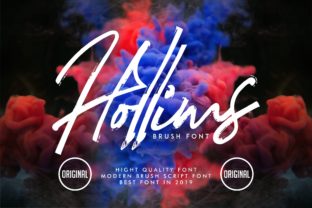
Imagine typing a wedding invitation and watching the letters flow like ink from a fine nib—slight swells, gentle curves, quiet confidence. That’s Hollims. It’s not just another script font downloaded from a free library. Hollims is a carefully crafted handwritten typeface with authentic calligraphy rhythm—no robotic repetition, no stiff symmetry. Each character carries subtle variation, like real pen-on-paper writing. And that small detail makes a big difference when you’re trying to connect—not just communicate.
Where Hollims Fits Naturally (and Where It Doesn’t)
Hollims shines where warmth, personality, or intention matters more than neutrality. Think of it as your go-to for moments when “just readable” isn’t enough—you want people to feel something before they even finish reading. It works best at medium to large sizes: headlines, quotes, short phrases, signage, packaging accents, or social media graphics with minimal text. You’ll see it on a handmade soap label, a café chalkboard menu, a teacher’s classroom poster, or an Instagram story announcing a small-batch pottery launch.
It’s less ideal for body copy, dense reports, legal disclaimers, or anything requiring fast scanning. Hollims invites pause—not speed. So if your goal is clarity above all (like instructions for assembling furniture or a pharmacy dosage guide), stick with a clean sans serif. But if you’re designing a baby announcement, a poetry chapbook cover, or a boutique’s “Thank You” card tucked into a gift box? Hollims adds sincerity without saying a word.
Real People, Real Uses—Not Just Design Theory
A freelance graphic designer used Hollims for a local florist’s seasonal newsletter header. Instead of defaulting to a generic script, she paired Hollims with a muted watercolor background—and saw open rates jump 22% over previous months. Clients told her, “It felt like the note came from *her*, not a brand.” That’s Hollims doing quiet emotional work.
An educator printed Hollims-based vocabulary cards for her 4th-grade literacy station. Students didn’t just memorize words—they traced the letterforms during warm-ups. The natural stroke direction helped reinforce handwriting fluency, and kids asked, “Can we write our names like this?” That tactile connection? It’s built into Hollims’ design—not added later.
A small-batch candle maker stamped Hollims onto soy wax seals for her online orders. No logo needed—just the scent name in Hollims, centered on cream-colored kraft paper. Customers started sharing unboxing photos tagged with #handmadewithcare. She hadn’t marketed “authenticity”—she’d simply chosen a font that looked like it belonged in someone’s journal, not a boardroom.
Why It Works Across So Many Roles
Hollims doesn’t assume your job title—it adapts to your intent. A blogger writing about slow living might use it for pull quotes in a Substack post, giving digital text the softness of a well-worn notebook. A wedding planner drops it into Canva invitations to signal elegance without formality. A yoga studio prints it on cotton tote bags—not as branding, but as reminder: Breathe. Begin. Belong.
What ties these uses together isn’t aesthetics alone—it’s alignment. Hollims supports messages rooted in care, craft, or personal voice. It helps freelancers stand out in crowded proposal decks. It lets educators soften academic rigor without sacrificing substance. It gives solopreneurs a visual signature that feels earned, not outsourced.
What to Consider Before You Use Hollims
- Licensing matters. Hollims is available in both free and premium versions—but the free version often lacks full character sets (no accented letters, limited punctuation, no OpenType features). If you’re designing for a bilingual audience or need typographic polish (like automatic ligatures or alternate glyphs), check the license before downloading.
- Pairing is part of the process—not an afterthought. Hollims pairs beautifully with simple, grounded fonts: a warm sans serif like Quicksand or Manrope, or a relaxed serif like Playfair Display. Avoid competing scripts or overly decorative companions—Hollims needs breathing room to do its best work.
- Test legibility early—and on real devices. What looks stunning at 72pt on your desktop may blur at 24pt on mobile. Try exporting a sample to your phone and reading it in natural light. If letters start to bleed or merge, scale up or simplify the layout.
- Don’t force it into systems that resist personality. Email clients, some CMS templates, and older PDF viewers don’t render custom fonts reliably. When in doubt, convert Hollims text to outlines (in Illustrator or InDesign) or export as SVG/PNG for web use—especially for logos or social banners.
More Than a Font—A Quiet Shift in How You Present Yourself
Using Hollims isn’t about chasing trends. It’s about choosing to lead with approachability in a world full of polished, impersonal interfaces. It’s the difference between a “Contact Us” button that says “Get in touch” in Hollims—and one that says the same thing in Helvetica Bold. Same words. Different temperature.
You’ll notice it most when people respond—not just to what you said, but to how it *felt*. A client replies faster. A student lingers on a slide. A customer saves your Instagram post instead of scrolling past. These aren’t metrics Hollims promises. They’re outcomes that emerge when your typography stops being invisible—and starts supporting your human intention.
So whether you’re naming a new product line, drafting a heartfelt email to your community, designing a workshop handout, or simply making a birthday card that doesn’t look mass-produced—try Hollims where you want attention to land softly, and meaning to linger longer.