Anoa: A Handwritten Font That Brings Calm, Charm, and Clarity to Your Designs
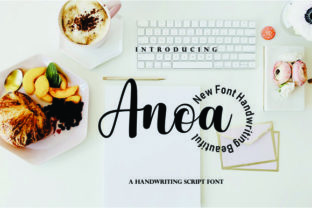
If you've ever struggled to find a handwritten font that feels authentic—not overly playful, not too stiff, but just right—then Anoa may be the quiet solution you’ve been overlooking. Anoa is a unique handwritten font designed with intention: soft curves, gentle spacing, and a natural rhythm that mirrors relaxed, confident handwriting. It doesn’t shout for attention—it invites it. And in a digital landscape saturated with bold sans-serifs and over-stylized scripts, Anoa stands out by being soothing, sincere, and surprisingly versatile.
Many designers, small business owners, educators, and content creators face a common challenge: communicating warmth and approachability without sacrificing professionalism or readability. Think of a wellness coach launching a new meditation guide, a boutique florist updating their website copy, or a teacher preparing printable classroom resources. In each case, the goal isn’t just legibility—it’s emotional resonance. The wrong font can make even thoughtful messaging feel cold or cluttered. The right one—like Anoa—helps ideas land gently and stay memorable.
What makes Anoa especially effective in these situations is its balanced personality. Unlike many handwritten fonts that lean heavily into whimsy (think bouncing baselines or exaggerated flourishes), Anoa maintains consistent x-height, clear letterforms, and subtle variation—enough to feel human, not chaotic. Its lowercase “a,” “g,” and “y” carry quiet character without compromising clarity at smaller sizes. That means it works beautifully not only in headlines and social media graphics but also in body text for digital newsletters, printable workbooks, or product packaging labels where tone and legibility must coexist.
Consider real-world applications:
- Branding for mindful businesses: A yoga studio, herbal apothecary, or sustainable skincare line can use Anoa in logo lockups or taglines to reinforce calm, care, and craftsmanship—without resorting to clichéd “zen” motifs.
- Educational materials: Teachers and curriculum designers report that students respond more positively to hand-lettered-style text in learning guides—especially for younger learners or neurodiverse audiences. Anoa’s even weight and open shapes support visual processing while preserving a personal, encouraging tone.
- Digital content with heart: Email subject lines, blog headers, or Instagram story text set in Anoa stand out in crowded feeds—not because they’re flashy, but because they feel intentionally human amid algorithm-driven uniformity.
Of course, using Anoa effectively depends on thoughtful implementation. Start by pairing it intentionally. Because it carries quiet confidence—not loud personality—it pairs exceptionally well with clean, neutral typefaces like Inter, Lato, or Source Sans Pro. Use Anoa for headings, quotes, callouts, or short blocks of emphasized text; let your supporting font handle longer paragraphs. This contrast creates hierarchy *and* harmony.
Also consider context and scale. While Anoa shines at 24–48px for web headers or print posters, avoid using it below 16px for body text—even with generous line height—unless testing confirms readability for your specific audience. For accessibility, always ensure sufficient color contrast (at least 4.5:1 against background) and avoid justified alignment, which can disrupt its natural rhythm.
Different users will approach Anoa with different priorities—and that’s where its flexibility becomes an asset. A freelance designer might choose Anoa to differentiate client work in a competitive portfolio, emphasizing authenticity over trend-chasing. A nonprofit communications manager may adopt it to soften formal reports or donor thank-you notes, making institutional messages feel more personal. Meanwhile, a solopreneur building a personal brand could use Anoa across their website, Canva templates, and printed business cards to create cohesive, recognizable warmth—without needing custom illustration or complex design skills.
It’s worth noting that Anoa isn’t meant to replace every other font in your toolkit. Rather, it fills a specific, often underserved niche: the need for handwritten authenticity that doesn’t sacrifice usability. In an era where AI-generated content and templated designs dominate, choosing a font like Anoa is a small but meaningful act of human-centered design—one that signals care, intention, and presence.
Implementation tips for best results:
- Start small: Introduce Anoa in one high-impact area first—like email newsletter headers or your website’s “About” section—to gauge audience response before expanding.
- Test across devices: Preview how Anoa renders on mobile screens, especially in Safari and Chrome, where font hinting can affect subtlety. Adjust tracking slightly if letters appear too tight at smaller sizes.
- Respect its voice: Avoid overloading Anoa with heavy shadows, aggressive outlines, or competing decorative elements. Let its natural charm speak for itself.
- Combine with texture thoughtfully: If using Anoa in print or mockups, pair it with soft paper textures or muted color palettes—not high-gloss finishes or neon accents—to preserve its calm aesthetic.
Ultimately, Anoa succeeds not because it does everything, but because it does one thing exceptionally well: it helps people communicate with kindness and clarity. Whether you're designing a calming landing page, crafting a heartfelt client proposal, or creating a printable journal for self-reflection, Anoa supports your message—not by drawing attention to itself, but by helping your audience feel seen, understood, and at ease.
That kind of impact doesn’t come from technical complexity or visual overload. It comes from restraint, empathy, and attention to detail—the very qualities Anoa embodies in every glyph. So if your current font choices leave you feeling like something’s missing—a sense of soul, a touch of stillness, a whisper of sincerity—consider giving Anoa space to do what it does best: help your work feel human, again.