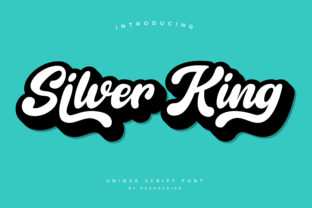
Silver King: Where Handwritten Authenticity Meets Design Confidence
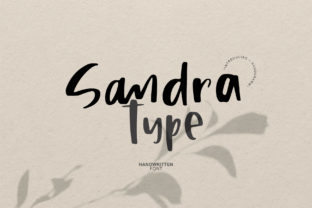
Typography is rarely just about letters—it’s about voice, intention, and human resonance. In a digital landscape saturated with geometric precision and algorithmically optimized fonts, Silver King stands apart not by chasing trends, but by honoring gesture. It’s a fun and bold handwritten font, full of authentic charm—crafted with visible pen pressure, organic line variation, and deliberate imperfection. That’s not a flaw; it’s the signature of presence. When designers choose Silver King, they’re not selecting a typeface—they’re inviting warmth, spontaneity, and tactile credibility into their work.
What Makes Silver King Feel Human—Not Just Hand-Drawn
Many fonts claim “handwritten” status, yet most rely on uniform stroke weights, symmetrical loops, or digitally smoothed curves that erase evidence of the hand behind them. Silver King resists that sanitization. Its letterforms retain the subtle irregularities of real ink on paper: tapered ascenders, slightly uneven baseline alignment, and variable spacing that mimics natural rhythm—not robotic repetition. The “g” has a looping tail with visible lift-off; the “a” features an open counter and a slight tilt; capital “S” curves with confident, unhesitating flow.
This isn’t randomness—it’s intentional craftsmanship. Each glyph was drawn with a flexible nib pen, then carefully digitized without over-smoothing or vector simplification. The result? A font that breathes. It doesn’t shout—but it holds attention because it feels *lived-in*. That authenticity translates directly to viewer perception: studies in visual cognition show that typographic warmth increases trust and engagement, especially in contexts where personal connection matters—brand storytelling, educational materials, or community-driven initiatives.
Designers Reach for Silver King When They Need Personality With Purpose
Unlike decorative script fonts that prioritize flourish over function, Silver King balances expressiveness with usability. Its generous x-height and open apertures ensure legibility even at smaller sizes—making it viable beyond headlines and logos. Consider these real-world applications:
- Event branding: Wedding invitations, festival posters, or local market banners gain immediate approachability. A bakery’s chalkboard-style menu using Silver King feels artisanal, not generic—inviting customers to linger rather than scan.
- Educational resources: Teachers use it in printable worksheets or classroom posters to soften academic tone without sacrificing clarity. One third-grade educator reported students were more likely to engage with reading prompts set in Silver King versus standard sans-serifs—citing its “friendly look” as a subtle confidence builder.
- Small business identity: A ceramicist’s website uses Silver King for section headers alongside a clean, neutral body font. The contrast signals craft (handmade pottery) and clarity (product details)—two essential brand pillars, visually reinforced.
- Digital interfaces: While not intended for long-form UI text, Silver King shines in micro-interactions—like animated “thank you” messages after form submission or celebratory notifications in learning apps. Its energy feels earned, not imposed.
Why Silver King Works Across Audiences—Not Just Aesthetes
Its appeal extends far beyond graphic designers. Silver King serves practical needs for diverse users:
Business owners appreciate how quickly it communicates values like authenticity and care—without requiring copywriting gymnastics. A local bookstore’s newsletter headline in Silver King (“New Arrivals Just Landed!”) reads as curated and personal, not automated. That nuance builds loyalty in crowded markets.
Educators and researchers find it effective for visual scaffolding—highlighting key concepts in slide decks or research summaries without triggering cognitive overload. Unlike overly ornate scripts, Silver King’s consistent rhythm supports information hierarchy. One university writing center integrated it into peer-review templates, noting students responded more openly to feedback when headings carried this gentle, non-authoritarian tone.
Hobbyists and creators benefit from its accessibility. No design degree required: install the font, type, and instantly elevate handmade cards, zines, or social media graphics. Its bold weight eliminates the need for shadow effects or outlines to ensure visibility—saving time and preserving file integrity across platforms.
Strategic Pairing: How Silver King Gains Strength Through Contrast
A common misconception is that expressive fonts must stand alone. In practice, Silver King thrives in dialogue—with itself and with other typefaces. Its versatility lies in contrast, not isolation.
For example, pairing Silver King with a sturdy, low-contrast sans-serif like Inter or IBM Plex Sans creates a dynamic yet balanced system. The handwritten font carries voice and emotion; the neutral companion handles structure and scale. This duality mirrors how humans communicate: ideas are framed in calm logic, but delivered with inflection and emphasis.
Within Silver King itself, subtle variations matter. While it ships as a single-weight family, skilled use involves manual adjustments—slight tracking expansion for all-caps impact, reduced leading for tight pull-quotes, or strategic kerning around problematic letter combinations (like “r” + “n”). These aren’t fixes; they’re refinements that honor the font’s handmade roots. Designers who treat Silver King as a tool—not a shortcut—unlock its full expressive range.
Real-World Considerations: When (and When Not) to Choose Silver King
No font is universally optimal—and recognizing limits is part of professional judgment. Here’s what experienced users observe:
- Accessibility note: While highly legible for most readers, Silver King is not recommended for primary body text in WCAG-compliant documents targeting low-vision users. Its variable stroke width and connected forms reduce character distinctness at small sizes. Use it for headings, callouts, or decorative accents instead—paired with an accessible, high-contrast body font.
- Technical compatibility: As an OpenType font, Silver King works natively across modern design software (Figma, Adobe Creative Cloud, Affinity Suite) and web platforms via @font-face embedding. However, avoid using it in email HTML clients with limited font support—fallback to system fonts remains essential for cross-client consistency.
- Cultural resonance: Its casual confidence reads as welcoming in North American and Western European contexts. In regions where formal typography signals respect (e.g., certain East Asian or Middle Eastern professional settings), test reception with local audiences first. Tone is contextual—and Silver King’s boldness may require calibration.
Beyond Aesthetics: The Psychological Weight of Handwritten Typography
Why does Silver King resonate so deeply? Neuroscience offers clues. Handwriting activates mirror neuron systems—the same networks engaged when observing human action. Seeing a “realistic” handwritten form—even digitally rendered—triggers subconscious associations with effort, intention, and individuality. That’s why a testimonial quote set in Silver King feels more credible than identical text in Helvetica: it implies someone *wrote it*, not generated it.
This effect compounds in environments starved of human cues—like remote learning dashboards or SaaS onboarding flows. A single line of encouragement in Silver King (“You’ve got this!”) can measurably improve task persistence, according to behavioral experiments conducted by a UX research team at a major edtech platform. The font didn’t change content—it changed how the content was *felt*.
Implementation Tips From Practitioners
Those who integrate Silver King most effectively follow quiet principles—not rules:
- Start with intent, not aesthetics: Ask, “What human quality do I want this text to embody?” If the answer is “precision,” choose another font. If it’s “warmth,” “energy,” or “approachability”—Silver King earns its place.
- Limit scope deliberately: Use it for no more than two hierarchical levels—typically headlines and subheads. Overuse dilutes impact and risks visual fatigue. One designer described it as “adding salt to soup: essential in measure, overwhelming in excess.”
- Test in context, not isolation: View Silver King on actual devices, against real backgrounds, alongside real imagery. Its charm emerges in relationship—not in font menus.
- Respect its rhythm: Avoid justified alignment or aggressive hyphenation. Let words breathe with natural spacing. Its personality lives in the gaps between letters as much as in the strokes themselves.
Final Thought: Silver King as a Design Ethic
Choosing Silver King is more than a stylistic decision—it reflects a stance on communication. In an era of AI-generated content and templated experiences, fonts like Silver King quietly advocate for human-centered design. They remind us that clarity need not be cold, professionalism need not be stiff, and efficiency need not erase evidence of care. Whether used by a researcher presenting field notes, a small-town librarian designing summer reading posters, or a startup founder crafting their first brand manifesto, Silver King offers something rare: the confidence to be boldly, unapologetically human—on the page, and beyond.