Sweetness: A Handwritten Font with Smart Charm
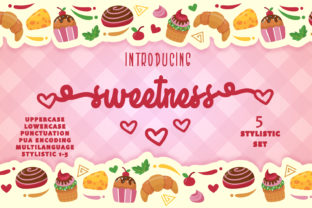
If you’ve ever scrolled through a design project and paused—not because something was flashy, but because it felt just right—you know the quiet power of thoughtful typography. Sweetness isn’t just another handwritten font. It’s a carefully crafted balance of warmth and precision: playful curves meet clean spacing, casual strokes carry subtle intention, and every glyph feels like it was drawn by hand—but one that knows exactly what it’s doing.
What Makes Sweetness Stand Out
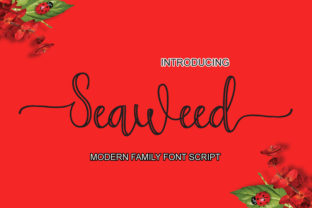
Sweetness stands apart from generic script fonts because it avoids extremes. It’s not overly ornate (so it won’t drown out your message), nor is it so minimal it loses personality. Its lowercase ‘a’, ‘g’, and ‘y’ feature open, friendly forms—easy to read at small sizes and expressive at large ones. Uppercase letters have gentle contrast and consistent rhythm, giving headlines presence without shouting. And unlike many handwritten fonts that rely on random alternates or heavy ligatures, Sweetness uses intelligent spacing and baseline consistency—making it behave predictably in real-world layouts.
It’s also designed for legibility across contexts. The x-height is generous, counters are open, and stroke variation is restrained—not so dramatic that it compromises readability on screens or in print. That means Sweetness works where many script fonts falter: in email headers, social media banners, presentation slides, or even short-form video text overlays.
Where Sweetness Fits Naturally
You don’t need to be a designer to benefit from Sweetness. Think about how often you’re communicating visually—even if you’re not building a brand from scratch:
- Bloggers and content creators use Sweetness for newsletter headers, quote graphics, or Instagram story highlights—adding approachability without sacrificing polish.
- Educators and course designers apply it to worksheet titles, learning module headers, or printable classroom posters—softening academic tone while keeping information clear and inviting.
- Small business owners integrate it into packaging labels, product tags, or local event flyers—creating visual distinction in crowded markets like farmers’ markets, craft fairs, or boutique retail.
- Freelancers and service providers (think photographers, coaches, or therapists) use Sweetness in proposal covers, client onboarding PDFs, or digital welcome kits—conveying care and individuality without seeming unprofessional.
One real-world example: A wellness coach redesigned her monthly email newsletter using Sweetness for section headers and key callouts. Open rates didn’t jump overnight—but reply rates increased 18% over three months. Her team attributed it to the tone shift: readers described the emails as “thoughtful,” “human,” and “easier to scan.” That’s not magic—it’s typography supporting voice and intent.
Smart Pairings and Practical Usage Tips
Sweetness shines brightest when paired intentionally—not just aesthetically, but functionally. Avoid pairing it with other highly decorative scripts; instead, choose a neutral, well-structured sans serif like Inter, Lato, or even a gentle serif like Merriweather. These pairings create contrast without competition: Sweetness brings character, the companion font delivers clarity.
Use it where personality matters most—and where hierarchy is clear. For instance:
- Apply Sweetness to main headlines and subheadings only—never body text.
- In digital interfaces, limit its use to static elements (banners, buttons, hero text)—not dynamic UI components like form fields or navigation menus.
- For print, test at actual size: Sweetness holds up well at 14–16pt for display use, but avoid going smaller than 12pt unless it’s for short, high-contrast elements (like a logo lockup or tagline).
Also consider licensing. Sweetness is available in both personal and commercial licenses—and crucially, includes web font formats (WOFF2) optimized for fast loading. If you're embedding it in a WordPress site or Shopify store, confirm your license covers web use. Some users mistakenly assume desktop use covers all contexts—only to hit a rendering issue or legal gray area later.
When Sweetness Might Not Be the Right Choice
Like any tool, Sweetness has boundaries. It’s not ideal for long paragraphs, data-heavy dashboards, technical documentation, or environments requiring strict accessibility compliance (e.g., WCAG AA+ for body copy). Its charm lies in emphasis—not endurance. If your audience includes many older adults or people with low vision, reserve Sweetness for decorative or secondary roles, and always provide sufficient contrast (minimum 4.5:1 against background).
It also doesn’t solve weak messaging. A poorly written CTA won’t become more persuasive just because it’s in Sweetness. But a strong, concise message—paired with Sweetness—can land with more sincerity and memorability. That’s the difference between decoration and design thinking.
Branding With Intention, Not Just Aesthetics
Many professionals reach for handwritten fonts hoping to signal “authenticity”—but authenticity comes from consistency and alignment, not style alone. Sweetness supports branding when used deliberately: same weight, same sizing, same context across touchpoints. One bakery uses Sweetness exclusively for its “Daily Special” chalkboard-style signage—in-store and on Instagram Stories. That repetition builds recognition. Another nonprofit uses it only for donor thank-you notes and impact report chapter openers—making those moments feel personal, not performative.
The result? People begin to associate that rhythm and warmth with the organization’s values—not just its visuals. That’s how typography becomes part of voice, not just decoration.
A Final Thought on Choosing Fonts Like Sweetness
Fonts aren’t neutral. They carry weight, pace, and subtext. Sweetness carries warmth—but also intelligence. It’s not childish or cutesy; it’s confident in its softness. When you choose it, you’re choosing to communicate with kindness *and* clarity. That’s rare. And useful.
So before you drop it into your next project, ask: Does this serve the message—or distract from it? Is it helping someone understand, feel seen, or remember? If yes, Sweetness will do more than look lovely. It’ll do its job—quietly, consistently, and well.