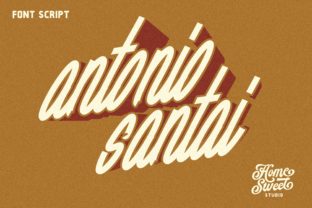
Antonio Santai: A Vintage-Inspired Handwritten Font with Bold Presence
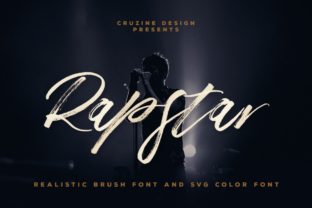
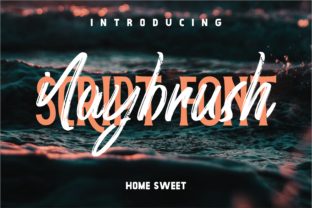
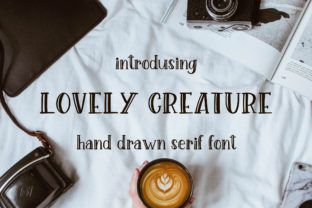
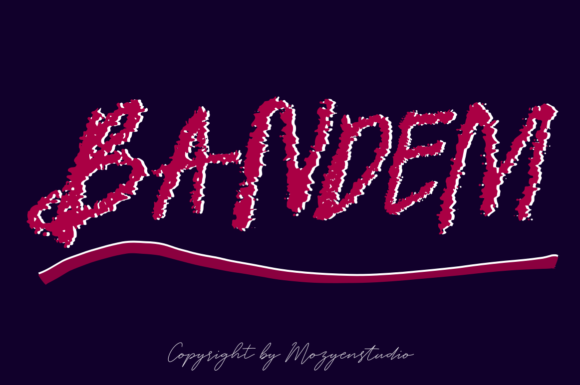
Antonio Santai is a digitally designed handwritten typeface that evokes mid-century American signage, hand-painted diner menus, and vintage advertising posters. It features high-contrast strokes, expressive swashes, and subtle irregularities that mimic natural pen movement—yet maintains consistent spacing and legibility across sizes. Unlike purely decorative display fonts, Antonio Santai balances personality with functional structure, making it suitable for both headline use and short-form typographic statements.
Why Consider Antonio Santai?
Designers and content creators often seek typefaces that convey authenticity, warmth, or historical resonance without sacrificing clarity. Antonio Santai appeals to those looking to evoke a specific era—roughly 1940s–1960s Americana—while retaining modern technical reliability. Its bold weight and rhythmic letterforms lend themselves well to contexts where visual impact matters more than extended reading, such as logos, packaging, event posters, or social media graphics.
It’s not merely “vintage-looking.” The design intentionally avoids over-stylization—no excessive distressing, ink bleeds, or simulated paper texture. That restraint makes Antonio Santai more versatile than many retro fonts that rely heavily on aesthetic gimmicks. Its strength lies in how confidently it occupies space: letters stand out without shouting, and the rhythm of its curves supports visual cohesion in layouts.
Key Benefits
- Distinctive voice: Offers immediate recognition due to its confident, slightly exaggerated letterforms—especially noticeable in capitals and connecting scripts.
- Cross-platform compatibility: Available in standard OpenType format with full Latin character support, including diacritics commonly used in Western European languages.
- Responsive behavior at scale: Performs well from large-format print (e.g., banners, murals) down to small digital displays (e.g., app splash screens), provided line length and spacing are adjusted appropriately.
- Low cognitive load for short text: Readers process words set in Antonio Santai quickly when used sparingly—its familiarity within the retro genre aids rapid comprehension in branding or call-to-action contexts.
Tradeoffs and Practical Considerations
Like most expressive handwritten fonts, Antonio Santai has limitations tied to its design intent. Its primary tradeoff is reduced readability in long passages. The variable stroke widths, subtle inconsistencies, and connected script elements slow scanning—making it unsuitable for body text, interface labels, or data-dense documents.
Another consideration is licensing scope. Antonio Santai is typically offered under desktop and web font licenses with clear usage boundaries. Projects involving embedded software, broadcast, or merchandise production may require extended licensing—reviewing the vendor’s terms before committing is essential.
Kerning pairs are optimized for common word combinations, but manual adjustments may be needed for unusual acronyms or brand names with awkward letter pairings (e.g., “TT,” “VV,” or “FL”). Designers working in responsive environments should also test how the font renders across browsers and operating systems, particularly at smaller sizes where hinting can affect clarity.
When Antonio Santai Is a Strong Fit
Antonio Santai excels in projects where tone and identity take priority over neutrality. It works especially well for:
- Branding initiatives for food and beverage businesses—cafés, bakeries, craft breweries—that want to signal artisanal values and local character;
- Festival or cultural event identities aiming to suggest nostalgia, celebration, or grassroots energy;
- Book covers or editorial features focused on American history, design heritage, or regional storytelling;
- Social media campaigns requiring strong visual anchoring—such as Instagram story headers or Pinterest pins—where typography functions more like imagery than text.
In these cases, Antonio Santai doesn’t just label content—it reinforces narrative context. Its presence signals intentionality: the choice to foreground human touch over digital uniformity.
When Alternatives May Be Worth Exploring
If your project requires greater typographic flexibility—for example, pairing a headline font with a robust body text family—Antonio Santai’s singular personality may limit harmony. Fonts like Playfair Display or Cormorant Garamond offer vintage-inspired serifs with extensive weights and optical sizes, enabling tighter typographic hierarchies.
For users needing broader language support—including Cyrillic, Greek, or extended Latin-A characters—Antonio Santai’s current glyph set may fall short. In multilingual publishing or global-facing applications, fonts like DM Serif Display or EB Garamond provide deeper linguistic coverage without compromising period-appropriate aesthetics.
Finally, if your workflow relies heavily on variable font technology—for responsive weight or width control—Antonio Santai is not currently available as a variable font. Designers prioritizing dynamic typography in web environments may find alternatives like Space Grotesk or Inter more adaptable, even if they lack retro character.
Making an Informed Decision
Evaluating Antonio Santai begins with clarifying your core objective. Ask: Is this font serving as a signature element—or part of a larger typographic system? If it’s the former, its strengths align well with goals centered on memorability and mood. If it’s the latter, assess whether supporting fonts exist (or can be sourced) that complement rather than compete with its voice.
Test it early in your workflow—not just visually, but functionally. Render sample text across intended outputs: print mockups, mobile previews, and accessibility checkers. Pay attention to contrast ratios when used on backgrounds, and verify that any required OpenType features (like discretionary ligatures or stylistic alternates) behave consistently across platforms.
Also consider audience expectations. A younger demographic may perceive Antonio Santai as charmingly nostalgic; a professional services audience might read it as informal or unserious. Context shapes interpretation—and the same font can signal “trusted tradition” in one setting and “unpolished amateurism” in another.
Lastly, compare licensing costs against projected usage duration and scale. A one-time desktop license may suffice for a single campaign, while ongoing web use across high-traffic domains warrants reviewing subscription models or multi-site options. Budget constraints shouldn’t override functionality—but they do shape realistic implementation paths.
Antonio Santai is not a universal solution, nor does it aim to be. Its value emerges clearly when matched to needs that prioritize expressive authenticity, period-relevant tone, and concise visual communication. For designers weighing emotional resonance against technical versatility, it represents a deliberate, well-executed option—not a default, but a considered choice.