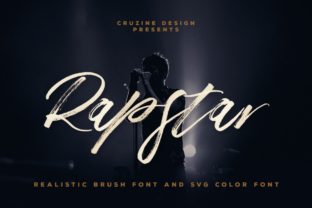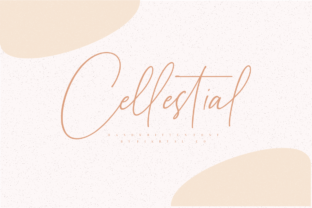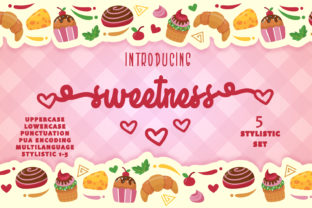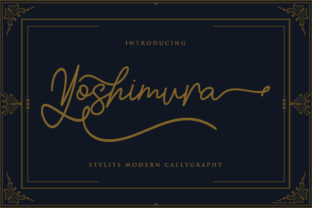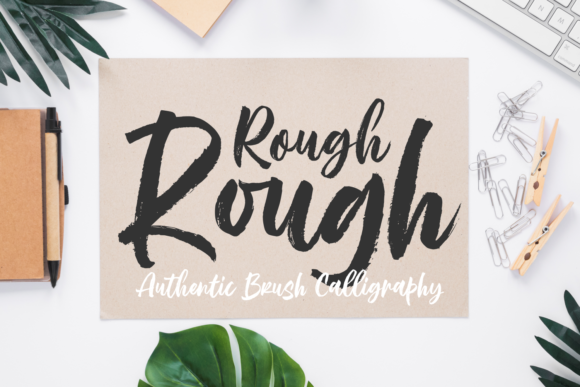
Rough Rough: A Handwritten Font with Intentional Imperfection
Rough Rough is a handwritten typeface designed to feel human—not polished, not sterile, but authentically tactile. Its defining trait isn’t just irregularity; it’s the consistency of that irregularity. Each character carries subtle variations in stroke weight, edge texture, and baseline alignment, yet the overall rhythm remains legible and cohesive. Unlike fonts that simulate randomness with excessive jitter or unpredictable ligatures, Rough Rough balances spontaneity with control. It’s the difference between a quick sketch made with purpose and one scribbled in haste.
What Sets Rough Rough Apart from Other Handwritten Fonts
Many handwritten fonts fall into one of two categories: overly refined scripts that mimic calligraphy tools (fountain pens, brush markers), or aggressively distressed options meant for grunge posters or streetwear branding. Rough Rough occupies a middle ground—neither elegant nor chaotic. Its letters retain natural entry and exit strokes, slight tapering, and organic spacing, but avoid exaggerated flourishes or intentional “broken” glyphs. This makes it more versatile than fonts built solely for impact at large sizes.
It also handles hierarchy well. While some playful handwritten fonts collapse in smaller point sizes or lose clarity in body text, Rough Rough maintains readability down to 14–16 pt in print and 18–20 px on screen—especially when used with generous line height and contrast. That’s not because it’s technically optimized like a system font, but because its imperfections are applied thoughtfully, not uniformly.
Where Rough Rough Fits in Real-World Design Work
Consider a small-batch coffee roaster launching a new seasonal blend. They need packaging that feels artisanal but still communicates origin, roast date, and tasting notes clearly. Using Rough Rough for the product name and flavor descriptors adds warmth and approachability, while pairing it with a clean, neutral sans-serif (like Inter or Lato) for technical details preserves scannability. The contrast works because Rough Rough doesn’t compete—it complements.
Similarly, an independent bookstore might use Rough Rough in event posters for author signings or poetry readings. It signals creativity and personality without implying informality that could undermine credibility. In this context, it avoids the overused “craft beer label” aesthetic while still feeling grounded and human—a subtle but meaningful distinction.
It’s less effective in situations demanding neutrality or broad accessibility. Legal disclaimers, data dashboards, or multilingual interfaces benefit from predictability and uniform glyph widths—qualities Rough Rough intentionally sacrifices. Likewise, long-form editorial content or academic publishing would strain its strengths; readers need consistency across paragraphs, not expressive variation.
Tradeoffs to Consider Before Choosing
Rough Rough includes stylistic alternates—some with tighter spacing, others with looser connections—but it does not offer optical sizing variants or extensive language support beyond basic Latin characters. If your project requires extended diacritics (e.g., Vietnamese or Central European languages), Cyrillic, or Greek, you’ll need to test thoroughly or plan fallbacks. Its character set covers standard punctuation, numerals, and common accented letters, but not full OpenType feature sets like contextual alternates or swashes.
Another practical consideration is rendering. On low-resolution screens or older browsers, the fine texture in Rough Rough’s edges may blur or pixelate slightly, especially at smaller sizes. This isn’t a flaw—it’s inherent to how the design prioritizes ink-like authenticity over digital precision. Designers working primarily in web environments should preview on multiple devices and consider using it selectively (e.g., headings only) rather than as a global font stack.
File size is modest—comparable to other single-weight variable or static OTF files—but if you’re building a performance-critical web application where every kilobyte matters, it won’t compress as efficiently as system fonts or highly optimized web fonts. That’s rarely a decisive factor, but worth noting in high-volume, latency-sensitive contexts.
Comparing Fit Across Common Use Cases
When evaluating handwritten fonts for brand identity, designers often weigh three dimensions: expressiveness, scalability, and adaptability. Rough Rough scores highly on expressiveness—it conveys individuality without shouting—and moderately high on scalability, provided usage is intentional. Its adaptability lies in restraint: it doesn’t try to be everything, so it pairs well with minimalist, geometric, or even monospaced companions.
In contrast, fonts with heavier textures or aggressive ink bleed may dominate layouts or clash with photography-heavy designs. Others with tighter letterfit can feel cramped next to generous whitespace or bold imagery. Rough Rough’s moderate x-height and open counters give it breathing room, making it easier to integrate into responsive layouts or layered compositions.
For motion graphics or animated UI elements, its consistent rhythm supports smooth transitions. Letters don’t “snap” into place unnaturally because their shapes already suggest movement—slight tilt, uneven baselines, tapered terminals. That subtlety translates well to short animations, like a logo reveal or hover effect on a CTA button.
When Another Option Might Be More Appropriate
Rough Rough shines in projects where authenticity and warmth matter more than universality. But it’s not universally optimal. If your audience skews toward formal sectors—finance, healthcare administration, or government communications—a more structured script or even a carefully chosen serif may better align with expectations of trust and stability.
Projects requiring strict typographic hierarchy across dozens of templates—think enterprise SaaS dashboards or university course catalogs—often benefit from modular systems where font families include multiple weights, widths, and optical sizes. Rough Rough is typically offered as a single weight (sometimes with light or bold variants), limiting flexibility in complex information architecture.
Also consider production constraints. If your team relies heavily on automated design systems or CMS-driven templates, a font with limited OpenType features may require manual overrides for special characters or language-specific adjustments—adding friction to workflows that prioritize speed and consistency.
Making a Practical Choice
Choosing Rough Rough isn’t about finding the “best” handwritten font—it’s about matching intent with execution. Ask yourself: Does this project benefit from visible human effort? Will viewers interpret slight irregularity as sincerity rather than carelessness? Is the message enhanced by warmth, or does it need clinical clarity?
Test it early—not just in mockups, but in real contexts. Try Rough Rough in a printed business card alongside your chosen body font. Paste it into a live email template and check rendering across Outlook, Gmail, and Apple Mail. Drop it into a Figma prototype and scroll through several pages to assess visual fatigue.
You’ll likely find Rough Rough works best when used sparingly and deliberately: a headline that anchors a campaign, a quote pull-out that adds voice to an article, or a signature element in a brand guideline that signals creative confidence without overcommitting to a singular tone.
It’s not a default. It’s a decision—one that rewards attention to detail, respect for context, and willingness to let typography carry meaning beyond the words themselves.